Welche Kunden sind beeinflussbar?
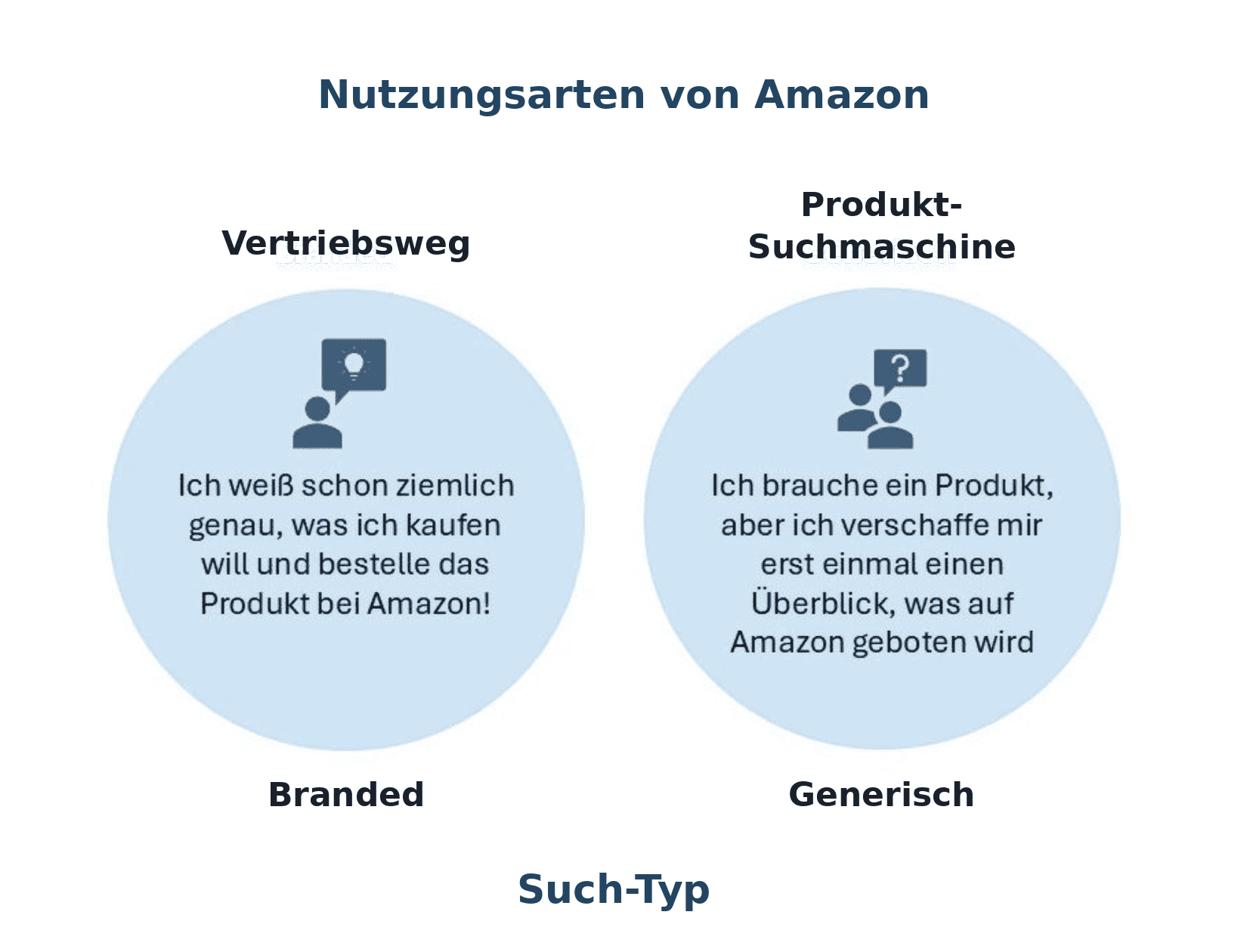
Ziel deiner Tätigkeiten auf Amazon ist es, mehr Kunden von deinem Produkt zu überzeugen. Deshalb ist es wichtig zu verstehen, wen du überhaupt überzeugen kannst. Wir schauen uns dafür im ersten Schritt an, wie Kunden Amazon nutzen. Dabei kann man vereinfacht von zwei Nutzungsarten ausgehen:
- Als Vertriebsweg: Die Marke steht fest, der Kauf erfolgt aus Convenience.
- Als Produkt-Suchmaschine: Der Kunde ist offen und orientiert sich an Ranking, Content und Bewertungen.
Das größte Wachstumspotenzial liegt bei Kunden, die Amazon als Produkt-Suchmaschine nutzen. Wir haben deshalb die SoC-Daten überprüft, ob sich Suchbegriffe so clustern lassen, dass wir eine Aussage treffen können, ob ein Kunde eher im Vertriebsweg- oder im Produktsuche-Modus unterwegs ist.
Warum Suchbegriffe und Suche der Ansatzpunkt sind
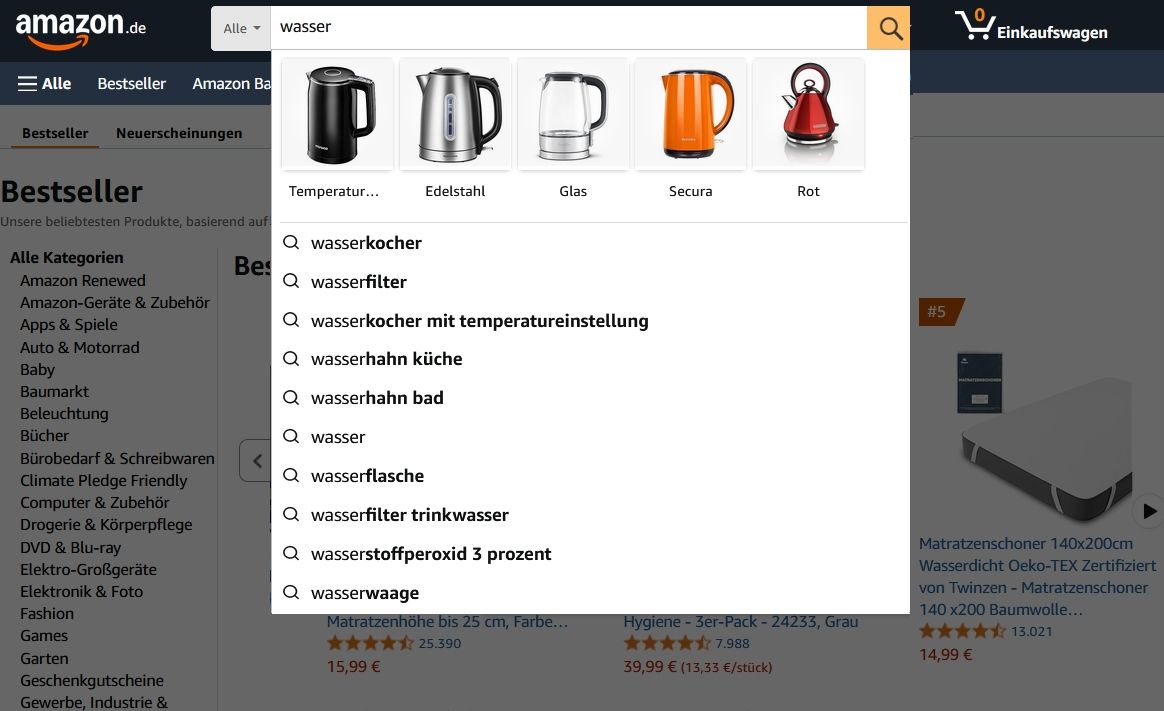
Der Großteil aller Käufe auf Amazon beginnt weiterhin in der Suchleiste. Auch wenn Systeme wie Rufus/Alexa die Suche perspektivisch verändern werden, gilt weiterhin: Wer versteht, wie Kunden suchen – und welche Produkte sie klicken, gewinnt Marktanteile. Darüber hinaus gibt es historische Daten zum Kundenverhalten, die weiterhin relevant bleiben.
Unsere SoC-Analysen zeigen:
- Ca. 20 % aller Suchen enthalten einen Markennamen im Suchbegriff.
- Über 95 % dieser Suchen führen zu Klicks auf Produkte der gesuchten Marke.
- Suchen ohne Markennamen zeigen, bis auf wenige Ausnahmen, eine breite Verteilung über verschiedene Marken.
Such-Typ
Aufgrund dieses sehr unterschiedlichen Verhaltens wurde für Suchbegriffe das Attribut Such-Typ mit zwei Ausprägungen eingeführt:
- branded (mit Markennamen im Suchbegriff)
- generisch
Die Zuordnung der Suchbegriffe erfolgt mittels KI und stellt sicher, dass Begriffe nur dann als branded eingestuft werden, wenn die erfolgreichen ASINs überwiegend zu der jeweiligen Marke gehören.
Grundsätzlich lässt sich sagen: Bei branded Suchbegriffen nutzen Suchende Amazon fast ausschließlich als Vertriebsweg, während generische Suchen fast immer bedeuten, dass Amazon als Produktsuchmaschine genutzt wird.
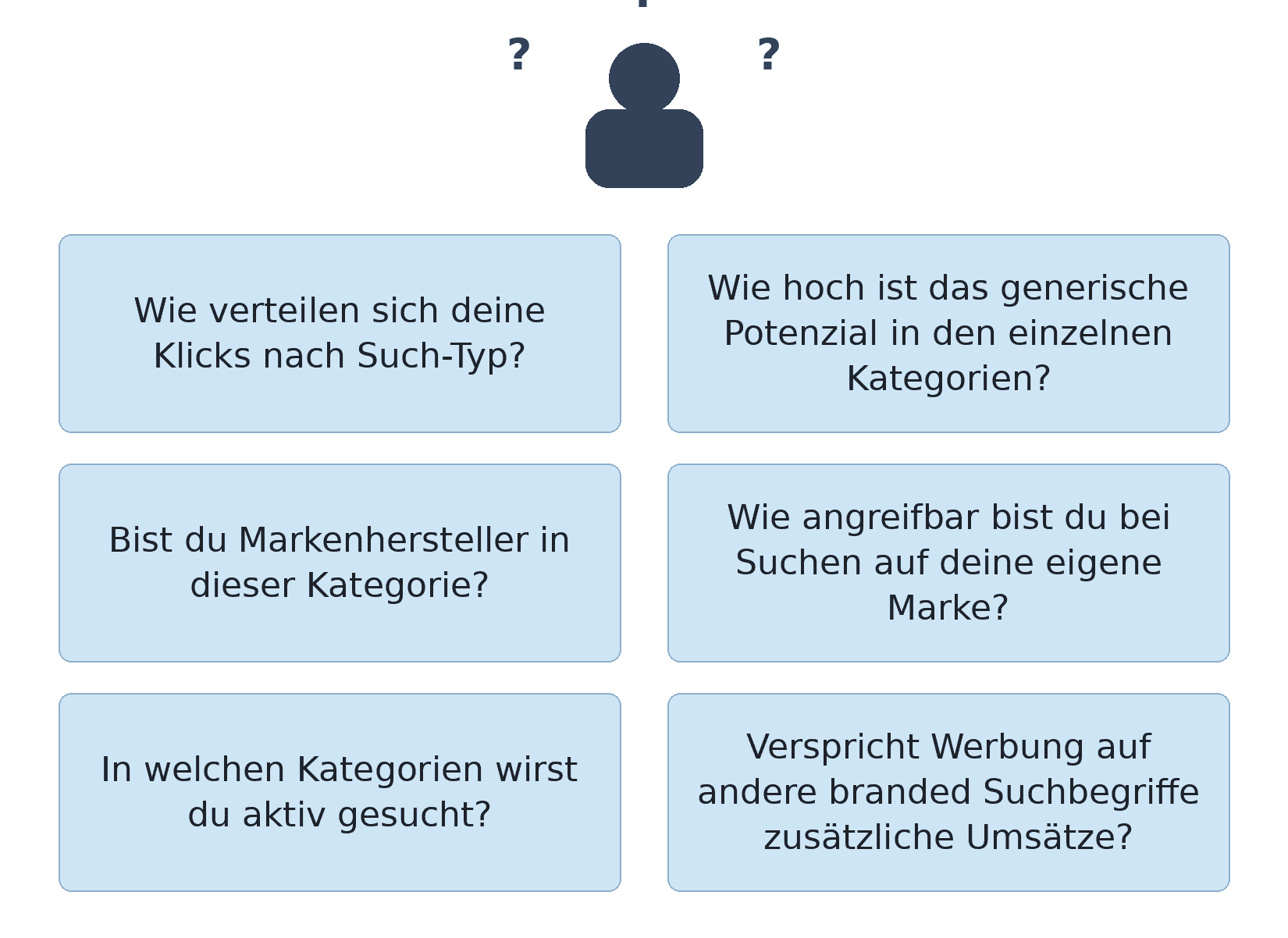
Mit Hilfe dieser Differenzierung können nun folgende Fragen beantwortet werden: